

Key Takeaways
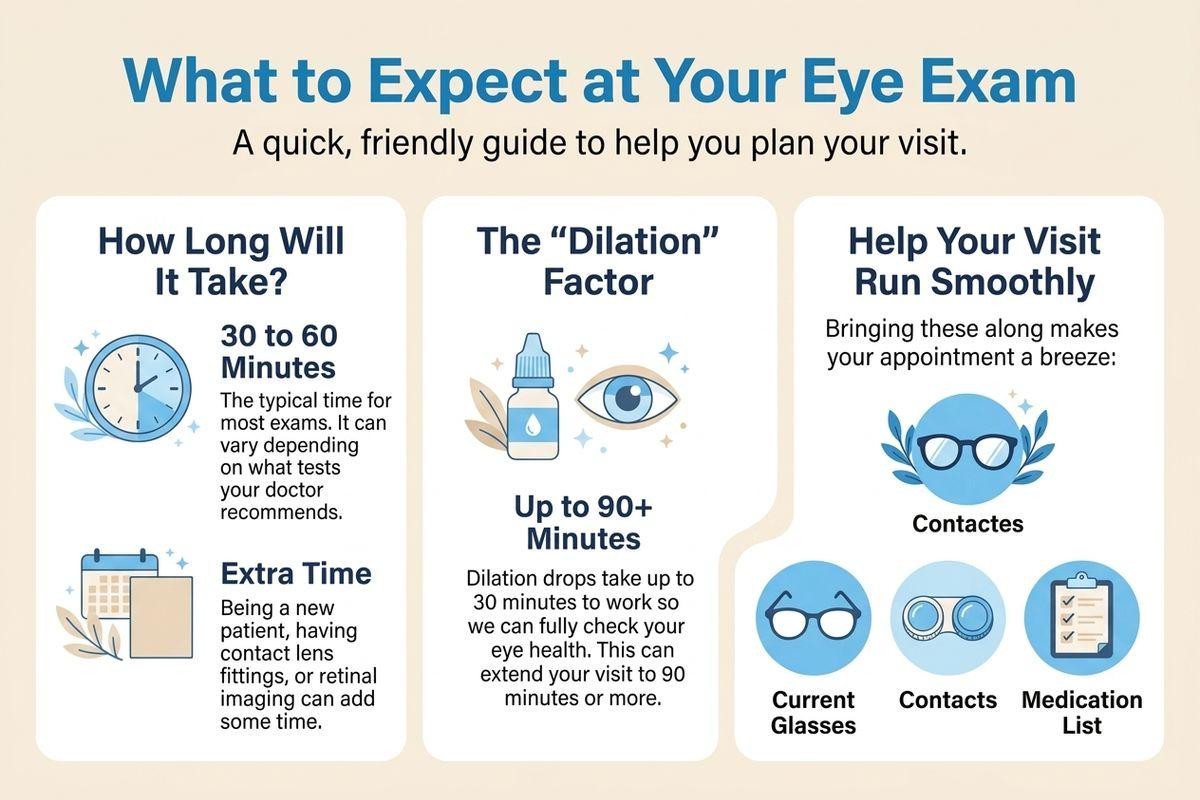
- Most eye exams run 30 to 60 minutes, but depending on the tests recommended by your eye doctor, it can vary.
- New patients, contact lens fittings, and retinal imaging can add time.
- Dilation drops take up to 30 minutes to work and can extend your visit to 90 minutes or more.
- Bringing your glasses, contacts, and a medication list helps the appointment move smoothly.
If you’ve been putting off an eye exam because you’re not sure how long it’ll take, you’re not alone. Between work, family, and everything else on your plate, it’s fair to want a realistic picture of what you’re signing up for before you book a weekday slot. Our team at Starling Eye Group is here to make sure you feel informed every step of the way.
For most people, a routine eye exam with an eye doctor in Gainesville takes between 30 and 60 minutes, though certain add-ons like dilation or contact lens fittings can make it last longer.
How Long an Eye Exam Takes
For many healthy patients coming in for their regular eye exam, 30 to 45 minutes is a reasonable window. New patients tend to run closer to an hour because there’s more ground to cover, from paperwork to health background to getting a full picture of your vision needs.
Filling out forms before your appointment can help shorten the start of your visit. If there’s paperwork, we recommend completing it the night before so you’re not rushing in the waiting room.
What Affects the Length of Your Appointment
Your Health History and Age
The optometrist will want to know about any medications you take, your family history of eye conditions, and any changes you’ve noticed in your vision. That conversation takes longer when you’re a new patient or when your health history is more complex.
People with diabetes may need a few additional steps during the exam. Your optometrist can perform a thorough check for changes in the blood vessels at the back of the eye, which takes a bit more time but gives a fuller picture of your eye health.
Contact Lens Fittings and Additional Tests
A contact lens fitting isn’t included in a standard eye exam. It’s a separate step that typically adds 15 to 30 minutes, as your eye doctor checks the fit, prescription, and lens type they recommend for your eyes.
Retinal imaging, or digital scans, is sometimes recommended depending on what your eye doctor sees, or simply as part of a thorough checkup. These add time to your visit, but they give your optometrist a much clearer look at the health of your retina. Retinal imaging uses digital cameras to capture detailed pictures of the back of the eye, helping detect signs associated with conditions like diabetic retinopathy and macular degeneration early.
What Happens During the Exam
Health History Review and Preliminary Checks
Before you sit down with the optometrist, a pretest technician will typically complete some groundwork. This can include checking your eye pressure, peripheral (side) vision, and color vision. You’ll also go over your medications and any family history of conditions like glaucoma or macular degeneration during this step.

The Main Exam Steps
Your eye doctor will check your visual acuity with a reading chart. This is the part most people remember, where you’re asked, “Which side is clearer, 1 or 2?” This step helps your eye doctor fine-tune your prescription so you can see clearly day to day.
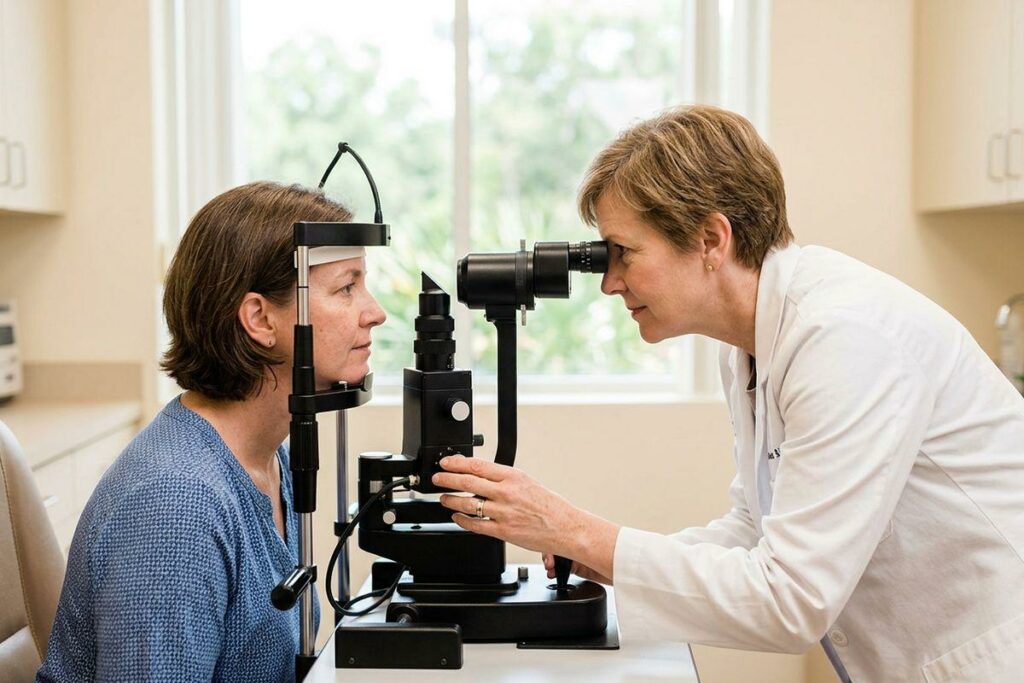
Then comes the slit lamp exam. This is a magnified look at the front of your eye, including the cornea (the outer layer of the eye) and the internal lens, and sometimes the back of the eye as well.
Eye Exams with Dilation: What to Expect
How Dilation Adds Time
Dilation means the optometrist puts special drops in your eyes to widen your pupils. This gives a much clearer view of the retina and the back of the eye. The drops can take up to 30 minutes to take full effect, so your visit will include a short wait. Dilation isn’t always necessary, and you can ask your eye doctor before your exam whether they will recommend dilating your eyes.
When dilation is part of the appointment, plan for the full visit to run 90 minutes or more.
After Your Eyes Are Dilated
Your pupils can stay dilated for up to 6 hours after the appointment. During that time, some people report that bright light feels uncomfortable, and anything close up, like your phone or a book, can look a little blurry.
We often recommend a few post-dilation steps to take:
- Bring a pair of sunglasses to wear on the way out, even on a cloudy day.
- Arrange a ride home if you can, since driving while dilated is not comfortable and not usually recommended.
- Limit screen time and close-up tasks until the drops wear off.
How to Prepare for Your Eye Exam
A little prep goes a long way toward a smooth visit. You don’t need to do much, but a few things make a real difference:
- Bring your current glasses and contacts so the optometrist can see what you’ve been working with.
- Bring a list of any medications you take, including supplements.
- Jot down any vision changes you’ve noticed, whether that’s blurry distance vision, eye strain, or headaches at the end of the day.
- If dilation is recommended, avoid scheduling anything that requires sharp close-up vision right after your appointment.
Schedule Your Appointment
At Starling Eye Group, we prioritize care that makes you feel cared for. Whether it’s your first eye exam in a while or you come in annually, our team is ready to walk you through what to expect. Schedule your visit and get a clear look at where your vision stands.