

Key Takeaways
- Your prescription is only as good as the measurement behind it, and in-person exams catch details that online orders often miss.
- A proper frame fit reduces the headaches and discomfort that poorly fitted glasses cause.
- Lens options like progressives and Transitions lenses can be matched to how you spend your day.
- Staff can help you use your vision insurance so you avoid surprise costs at checkout.
- Follow-up adjustments are available after you take your glasses home.
Don’t Take Shortcuts with Your Glasses
You found a pair of frames online for $39. They look great in the photo. Then they arrive, and something feels off. Maybe the lenses give you a headache. Maybe the frames slide down your nose. Or maybe they just never feel quite right, even though the prescription number matches your last one.
Buying glasses from your optometrist offers an advantage that an online order can’t replicate: care that follows you all the way through the process. Here are seven reasons why that matters, straight from our team at Starling Eye Group, your neighborhood eye doctor in Gainesville.
Your Prescription & Fit Matter More Than You Think
1. Getting the Right Prescription
During an in-person exam, your optometrist checks for details that don’t show up in a self-reported history or a photo, like how your eyes work together, how you respond to subtle prescription changes, and whether your vision has shifted since your last appointment.
Pupillary distance, the measurement between your pupils, is another factor that affects how well your lenses work. Even a small error here can contribute to eye strain, so it needs to be measured on your actual face.
2. A Proper Frame Fit Changes Everything
Frames that sit crooked, pinch your nose, or slide forward are more than annoying. Even worse, poorly fitted frames can pull your eyes out of alignment with the optical center of your lenses, resulting in long-term discomfort and glasses that you might struggle to get used to.
When you buy glasses in person, an optician can adjust the nose pads and temples to your face. No waiting. No mailing them back. Plus, if you want guidance on choosing eyewear, we can also help you with that.
3. Help Picking Frames You’ll Actually Wear
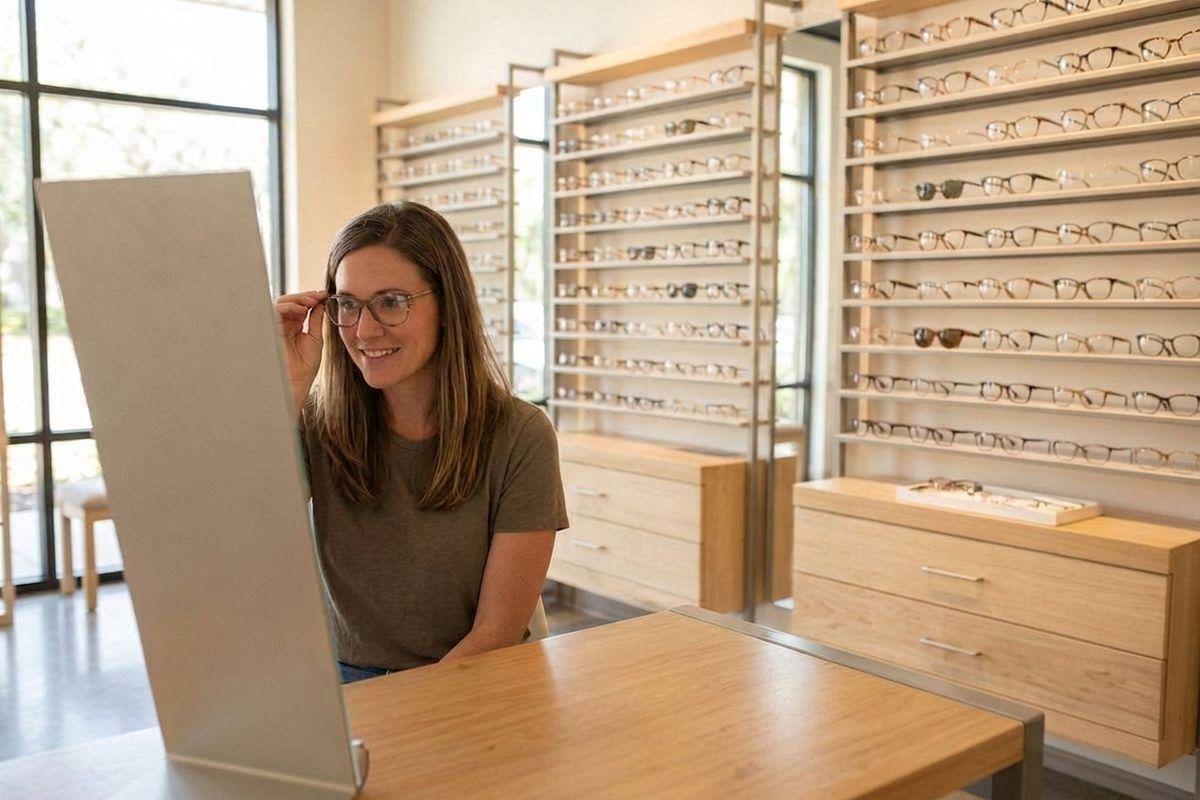
Choosing frames in person means you can try them on, see how they sit on your face, and get an honest opinion from someone who knows your prescription. Face shape, skin tone, and lifestyle all play a role in what works well for you. For example, someone who wears progressive lenses needs a frame with enough vertical height for the lens zones to work properly. That’s not something a filter on a website can tell you.
There’s also something to be said for not guessing. When you try frames on in person, you leave knowing they look right and fit right, not just hoping they will.
The Optical & Eye Exam Work Together
4. One Place for Your Full Eye Health Picture
When your glasses come from the same place where you had your exam, your optometrist’s notes are part of the conversation. Your vision history, any recent changes to your vision, and even your day-to-day habits all factor into the lenses that we recommend.
That kind of continuity is hard to replicate when your exam happens in one place and your glasses arrive in a box from another.
5. Follow-Up Care After You Leave
Glasses sometimes need small tweaks after a few weeks of wear. A temple arm might loosen. The frames themselves might shift after you set them down one too many times. When you buy glasses from your optometrist, you can come back for adjustments without an appointment or an extra fee.
Catching a small fit problem early keeps it from turning into a reason to replace your frames sooner than necessary.
6. Lens Options Tailored to Your Daily Life
Not every pair of glasses needs to do the same job. For example, if you’re at the age where reading up close and seeing across the room both feel like a juggling act, progressive lenses, which blend distance and near correction into one lens without a visible line, may be a good option.
Transitions lenses, which darken in sunlight and clear indoors, are convenient for many people, while lenses designed for night driving are great if that’s part of your routine. If you’re prone to digital eye strain, you may be a candidate for prism-corrected lenses like Neurolens. Your optometrist can help you decide which of these options—if any—are right for you.
Your Vision Insurance Goes Further
7. Making the Most of Your Benefits
Vision insurance can be confusing. There are allowances for frames, separate allowances for lenses, and add-on benefits that vary by plan. The staff at a full-service optical location can walk you through what your plan covers, so you know your out-of-pocket cost before you’re standing at the register.
That kind of help makes a real difference, especially if you haven’t used your benefits in a while and aren’t sure what’s changed.
Come See the Team at Starling Eye Group
Starling Eye Group has been helping Gainesville families find the right pair of glasses for over 25 years. Whether you’re due for an exam, shopping for new frames, or curious about lens options you haven’t tried yet, our team on NW 43rd Street is easy to reach. Give our office a call to get started.