
Key Takeaways
- Your health history, medications, and daily habits all shape what your eye doctor looks for.
- Different tests check vision clarity, eye pressure, internal eye health, and how both eyes work together.
- Dilation gives your eye doctor a clear view of your retina and optic nerve.
- Annual eye exams are recommended for everyone.
Eye Exams Help Keep Your Vision Healthy
A lot of people put off eye exams because they think their vision seems fine. However, vision changes, and some eye conditions don’t show up with noticeable symptoms until they’ve been developing for a while.
A comprehensive eye exam at Starling Eye Group checks your vision clarity and your overall eye health by using a range of short tests that tell your eye doctor how your eyes are doing. Here’s what to expect when you walk through our door for an adult eye exam.
What the Doctor Wants to Know Before the Exam Starts
Your Health History Matters More Than You Think
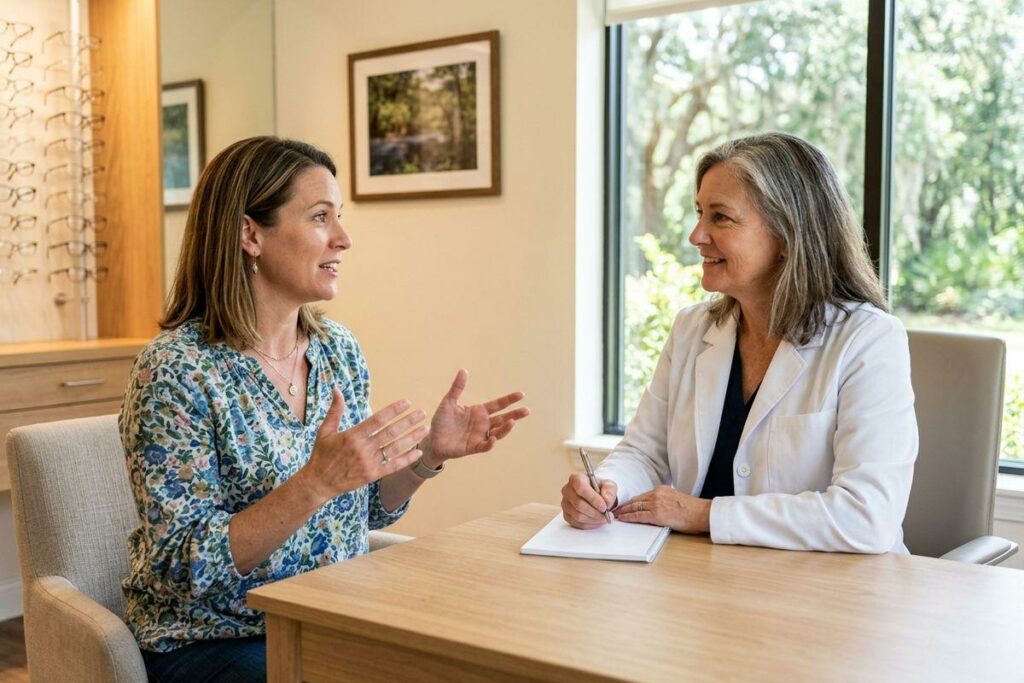
Before any testing begins, you’ll be asked about your health. Current medications, existing conditions like diabetes or high blood pressure, and any family history of eye disease all play a role in what we look for.
Screen habits matter too. If you spend most of your workday on a computer, or you’ve noticed trouble seeing clearly while driving at night, mention that. These everyday details help us tailor the exam to what’s actually going on in your life.
What to Bring to Your Appointment
Bring your current glasses or contacts so that we can compare your existing prescription to the result of your eye exam. If you’ve had any symptoms, even seemingly minor ones like occasional blurry patches or eyes that feel tired by mid-afternoon, jot them down beforehand so you don’t forget to mention them.
The Vision Tests You’ll Go Through
Reading an Eye Chart
You probably expected this one. A visual acuity test asks you to read letters off a chart, usually one eye at a time. The smaller the letters you can read, the stronger your vision. If you have 20/20 vision, your vision clarity is normal. On the other hand, if you have 20/40 vision, this means that you need to be 20 feet away to see what someone with typical vision can see from 40 feet away.
The Prescription Fitting Process
This is where the phoropter comes in. A phoropter is the large device that your eye doctor uses to determine which lenses you need. They’ll flip through different lenses and ask which ones look clearer. It might seem a little like a guessing game, but your answers help narrow down the right correction.
How Your Eye Doctor Checks Your Eye Health
Eye Pressure & Glaucoma Risk
The eye pressure test is quick. It measures the pressure inside your eye, which can be an early sign of glaucoma, a condition that damages the optic nerve over time. Glaucoma often has no symptoms in its early stages, so this test is one of the more important ones, especially as you get older.

Dilation & a Look Inside the Eye
If your eye doctor recommends dilation, you’ll get eye drops that widen your pupils. This makes your eyes sensitive to light for a few hours, so it’s worth arranging a ride home after your appointment.
As part of a dilated eye exam, your eye doctor examines the retina, optic nerve, and surrounding tissue. This part of the exam can show signs of conditions like diabetes and high blood pressure, sometimes before you’ve noticed anything yourself.
Other Tests That Round Out the Exam
A comprehensive eye exam covers a few more areas beyond vision and pressure. These vary by patient, but they’re still worth knowing about.
- An eye teaming test checks whether your eyes are working together smoothly, which affects depth perception and reading comfort.
- Peripheral vision, color vision, and depth perception checks give a broader picture of how your visual system is functioning.
- Your eye doctor may also look at eyelid health and your tear film, which can point to dry eye if something seems off.
How Often Adults in Gainesville Should See an Eye Doctor
General Frequency by Age Group
For most adults annual eye exams are recommended.
When More Frequent Visits Make Sense
Some situations call for more regular check-ins with an eye doctor in Gainesville. If any of the following apply to you, it’s worth talking to your optometrist about how often you should come in.
- You have diabetes, high blood pressure, or a family history of eye disease.
- You wear contact lenses or have had refractive surgery in the past.
- You’ve noticed any change in your vision between appointments, even a small one.
People with diabetes, in particular, benefit from an annual diabetic eye exam. Ultimately, though, the right schedule depends on your eyes, your health, and what’s changed since your last visit.
If it’s been a while since your last exam, or you’re not sure when you’re due, our team at Starling Eye Group is easy to reach and happy to help you figure out the right next step. Give our office a call and get your visit on the calendar.